
outdoor cats & found kittens
here at IndyHumane we give every animal - no matter how small - a chance at a new life!
FOUND KITTENS
Kittens make up the largest percentage of animals brought to our shelter. Most of these kittens are born outside and found by folks in our communities. These tiny, fragile babies require huge amounts of time, care, and resources. Check out this flow chart to learn what to do if you find kittens!
first things first: wait!
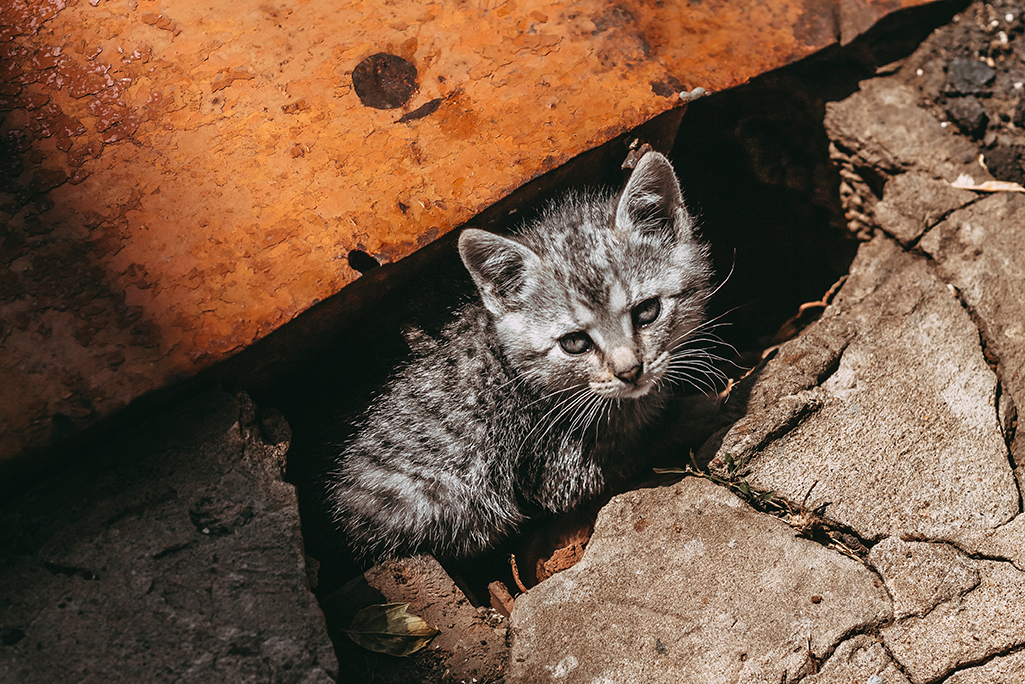
Everyone’s first instinct is to grab the kittens and take them to a shelter. This applies to other baby animals as well such as bunnies and birds. However, that is NOT the best thing to do.
Wait and watch for a while before removing from the area. The mom cat will likely return after being out to look for food or may be in the process of moving the kittens to a new, safe location. Taking a baby from its mother significantly decreases its chances of survival. Even the best bottle baby care is nothing compared to having a mother. You can wait for the mom for about 12 hours. As long as the kittens are in a safe, warm place, do not move them.
When waiting, be sure to assess the situation. The only exceptions are:
– the kittens are in a dangerous area
– the weather is poor
– the kittens appear sick and starving
If any of those situations apply, they will need moved ASAP. Still, try to move them to a safer location nearby, just in case mom comes back.
if mom returns...
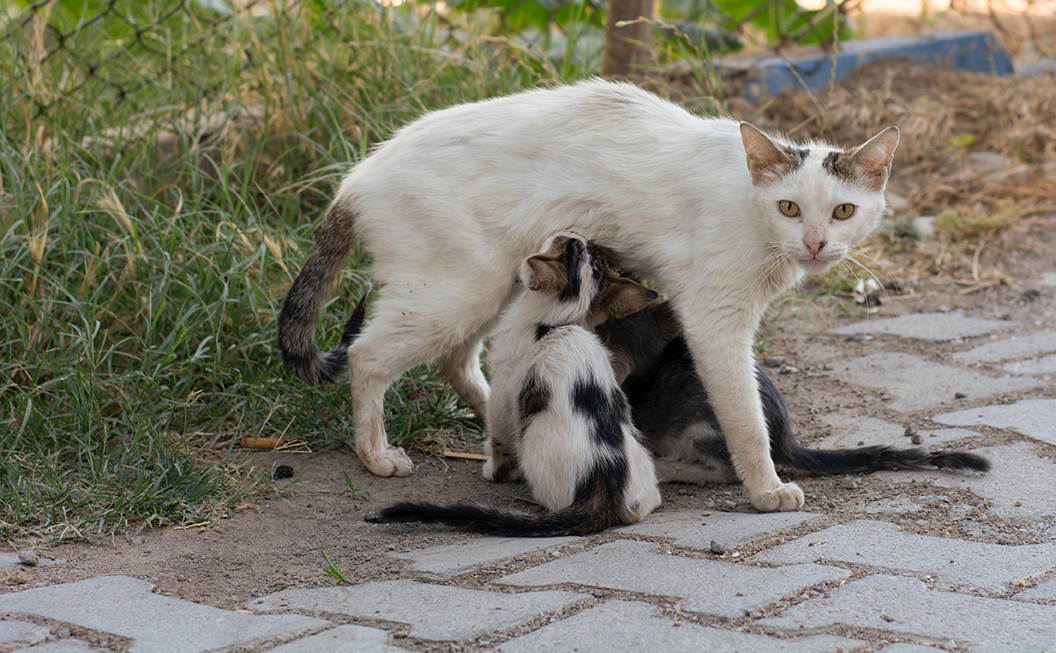
If possible, it is best for mom to stay with the kittens until they are weaned. Provide them a safe area with a warm shelter and regular food for mom. Be careful attempting to handle mom. If she is feral, do not intervene.
If mom is friendly, or an owned cat, keep inside in a safe area. Still be cautious, as moms can be protective of their babies even if they are usually friendly.
Once the kittens become mobile and eat on their own they can be separated from mom if necessary. At this point, it is ideal to work on finding foster for them, giving them proper medical care including being spayed/neutered, and getting them ready for adoption.
It is crucial at this point to trap mom, get her fixes and return her to where she was found as a community cat. Female cats can get pregnant again very quickly (including while they are still nursing their babies). Get them spayed ASAP to avoid more babies.
if mom does not return...
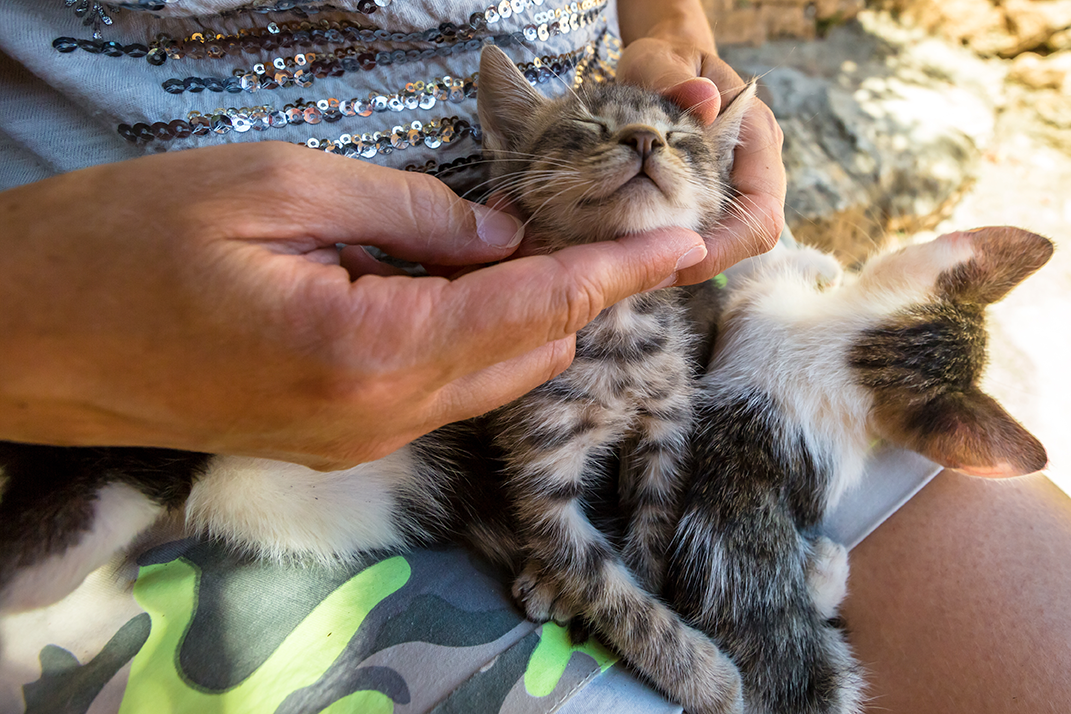
Only move the kittens if you are sure the mom won't be returning - you know she was injured, she has not returned in several hours and the kittens are crying, or someone you know has already removed the kittens from the area.
Get them to a safe, warm, and clean environment inside.
Be prepared to give them the care they need.
plan to keep the kittens?
If you plan to keep the kitten(s) or have found homes for them, get them spayed and neutered! IndyHumane’s Downtown Clinic will provide low cost spaying and neutering for kittens as well as community cats. Click here for details!

need to surrender the kittens?
For kittens only, fill out this form.
Kittens can be spayed/neutered and ready for adoption at 8 weeks of age. Until then it is best for them to stay in a home.
unable to provide care?
If you are unable to care for them temporarily, an intake appointment will be made ASAP. Since we want to keep kittens out of the shelter environment, timing for an appointment will depend on foster home availability, and you may need to wait, depending on space.
Again, for kittens only, fill out this form.
outdoor cats
trap - neuter - return
Statistics show that Trap-Neuter-Return (TNR) efforts are much more successful at reducing outdoor cat populations than simply removing/relocating these cats. TNR involves trapping outdoor cats, spaying/neutering them, vaccinating them, and returning them to the territories they know. Programs like this ensure that outdoor cats are not spreading diseases, are not able to reproduce and contribute to the overpopulation of cats.
commonly asked questions
Community cats are cats who live outside for a majority of their lives and are not owned by a person. (They’re often referred to as feral cats, stray cats, or outdoor cats, as well.) This is usually because they have not been socialized to humans and prefer to keep their distance from people. They can sometimes be friendly but often have a preference of living outside. These are cats that would likely not do well in a home environment, therefore their best option is to live outdoors where someone can provide a shelter and regular feeding. These cats are usually identified by an ear tip, which indicates to other people that the cat has already been spayed or neutered and is performed at the time of the surgery.
Community cats are generally found where there are resources (such as someone feeding them) and end up adapting and bonding to their territories. They know where the food is and where the best places to sleep and hide are, so moving these cats is incredibly stressful for them. Additionally, removing them simply makes room for new cats to move in and claim the resources. TNR ensures that these cats will defend their territories and make it less likely that new cats will come in and begin breeding.
Harming community cats is a crime. If you think a community cat is in danger, please contact the Mayor’s Action Center.
There are many options for providing shelters! Visit the Alley Cat Allies website for examples. Contact Indy Neighborhood Cats to request a shelter.
There are some helpful tips on the Alley Cat Allies website – check it out here!
Report animal cruelty to the Mayor’s Action Center.
For urgent situations, contact non-emergency police at 317-327-3811 to dispatch Animal Control.

Committed to helping central Indiana’s pets in need since 1905. Find your new best friend today.
adoption hours
Monday: Closed
Tuesday-Friday: 12pm - 7pm
Saturday-Sunday: 12pm - 6pm
IndyHumane
7929 N Michigan Rd
Indianapolis, IN 46268
IndyHumane Downtown Clinic
456 N Holmes Ave
Indianapolis, IN 46222